Healthy gums don't bleed when you brush or floss. Bleeding is most often the first sign of gingivitis, an inflammation of the gums caused by plaque at the gum line.
Common causes
- Plaque left at the gum line because of rushed or incomplete brushing
- Hardened tartar that brushing can't remove
- Starting to floss after a long gap (this usually settles within a week or two)
- Hormonal changes, such as pregnancy
- Some medicines, including blood thinners
- Uncontrolled diabetes, which makes gum problems more likely
What you can do at home
- Brush twice a day for two minutes with a soft brush, angled towards the gum line
- Clean between teeth once a day with floss or interdental brushes
- Don't stop brushing the area because it bleeds; gentle cleaning helps it heal
- If you smoke, stopping makes a real difference to gum health
When to see a dentist
Book a check-up if bleeding lasts more than two weeks, if gums are swollen or receding, if you notice bad breath that won't go away, or if teeth feel loose. A professional cleaning removes tartar, and early gum disease can usually be reversed.
Talk to a dentist about gum treatment
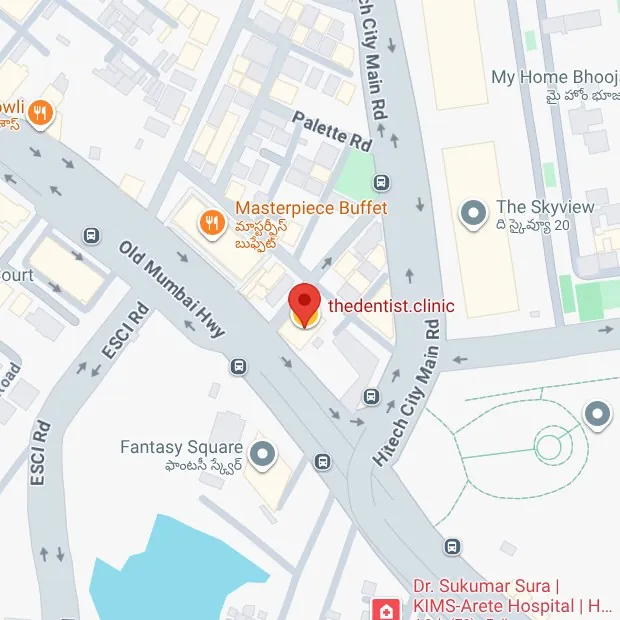
Book an examination at Millennium Square, Gachibowli. Mon–Sat, 10 AM–7 PM.