If you have lost a tooth, the two most common fixed options are a dental implant and a bridge. Both can look natural and let you chew normally. The right choice depends on your teeth, your bone and your priorities.
How a bridge works
A bridge is a false tooth held by crowns on the teeth either side of the gap. Those neighbouring teeth are shaped to take the crowns. Treatment usually takes two visits over a week or two.
How an implant works
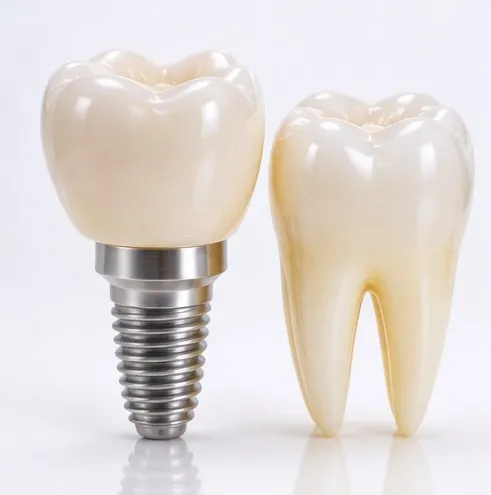
An implant is a titanium post placed in the jawbone where the tooth was. After the bone heals around it, usually 3 to 6 months, a crown is fixed on top. The teeth next to the gap are left untouched.
Points to weigh up
- Neighbouring teeth: a bridge needs them prepared; an implant doesn't.
- Time: a bridge is faster; an implant needs healing time.
- Bone: an implant needs enough healthy bone, or grafting first. A bridge doesn't.
- Cleaning: a bridge needs cleaning under the false tooth; an implant is cleaned much like a natural tooth.
- Health: smoking and uncontrolled diabetes affect implant healing and need discussing.
Which should you choose?
If the teeth beside the gap already have large fillings or crowns, a bridge can make sense. If they are healthy, an implant avoids cutting them down. An examination and X-rays are the only way to know what suits you.
Talk to a dentist about dental implants
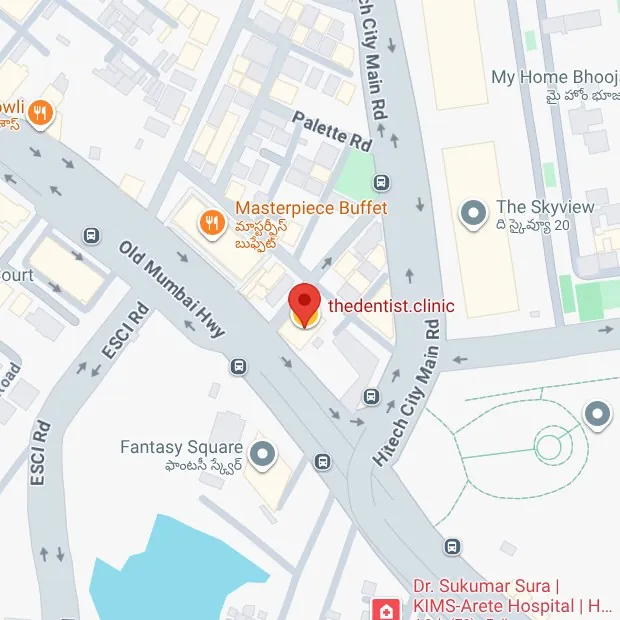
Book an examination at Millennium Square, Gachibowli. Mon–Sat, 10 AM–7 PM.